
How Lafayette Residents Are Found
The Lafayette residents directory is a set of records, not one master roll. The Boulder County Assessor can connect a name to a taxable parcel, legal description, situs address, and mailing address. Boulder Elections publishes allowed voter fields in downloadable reports. The Clerk and Recorder exposes a grantor-grantee index for recorded instruments. Courts, state agencies, libraries, and local archives answer different questions. A current name search and a family-history search should not begin in the same place.
Use a short chain. Begin with the clue that is most certain, then save the record number or legal description before moving on. The chain below keeps a search tied to a real custodian.
- Run Boulder County Property Search by owner name, address, street, subdivision, account, parcel, or S-T-R.
- Compare an allowed Boulder County voter report by name, address, status, precinct, or birth year.
- Test the person or legal description in Boulder Public Search for deeds, liens, plats, or other recorded documents.
- Use a Colorado Judicial docket, a library collection, or a historical index when the question is about a case or an earlier resident.
- Ask the custodian, library, archive, or CORA office for records that are retained but not published online.
That order reduces false matches. It also makes clear when the record shows ownership, registration, a court event, or a past household rather than present occupancy.
The Offices Behind Lafayette Resident Records
Lafayette is a home-rule city in Boulder County, while Boulder is the county seat. The City Clerk holds municipal administrative and historical records, including election material and cemetery records. Boulder County keeps the assessor roll, recording index, election reports, GIS layers, and tax information. The Colorado Judicial Branch holds district and county court files. CDPHE and local vital-record offices apply a separate confidentiality system. Knowing the boundary saves a request sent to the wrong desk.
Boulder County Recording Division
1750 33rd St, Suite 201
Boulder, CO 80301
303-413-7770
Boulder County Elections
1750 33rd St, Suite 200
Boulder, CO 80301
303-413-7740
The Recording Division accepts phone and email questions as well as online searching. The Assessor has a Tuesday Lafayette drop-box and branch service at 1755 S Public Road. Elections accepts standard downloads without an account and handles other-data requests through its county route. City-held material belongs with the Lafayette City Clerk at City Hall, 1290 S Public Road, 303-604-4386, Monday through Friday from 8 a.m. to 5 p.m.
Note: Match the office to the record type before searching; Lafayette city files, Boulder County rolls, and Colorado court or vital files follow separate custodians.
Lafayette Property Search: Owner Records
The Assessor's Property Search is the strongest first bridge from a Lafayette address to a named record. Its search bar accepts an owner name, address, street, subdivision, account, parcel, or S-T-R. A map click can work when a number is unclear. The result may show Address, Account Number, Parcel Number, Lot Size, Estimated Acres, Subdivision, Neighborhood, Market Area, Legal Description, Owner, and Mailing Address. Save those fields before you open a deed index.
| Search field or result | What it contributes |
|---|---|
| Owner or street search | Finds current taxable parcel matches, with name variants worth testing. |
| Address and map click | Locates the situs parcel and helps separate nearby streets or jurisdictions. |
| Account and parcel number | Stable county identifiers to carry into GIS, Treasurer, or recording work. |
| Legal description | Connects a modern address to subdivision, lot, block, or metes-and-bounds deed language. |
| Owner and mailing address | Shows assessed ownership and tax-mail destination, not a full household list. |
The county inventory is large, with more than 120,000 properties and more than $120 billion in assessed-value context reported in the research. That scale explains why an owner name can return several entities, trusts, or estate records. Carry the legal description forward. It is often a better anchor than a common surname.
For a street-wide question, use the map and street search one parcel at a time. The detailed by-address chain belongs on the Lafayette street directory page. A property card can tell you who the county assesses, but it cannot certify who sleeps at the address.
Note: A mailing address may be outside Lafayette, so treat it as a research clue rather than proof of the parcel owner's residence.
Current Lafayette Resident Sources
Different records answer different versions of “who is connected to this place?” The table keeps the distinctions visible. A resident directory search is stronger when the record type is named beside the result.
| Source | Who or what it records | Keeper | Access |
|---|---|---|---|
| Property roll | Assessed owner, situs, mailing, parcel, legal and value fields | Boulder Assessor | Free Property Search |
| Voter reports | Allowed name, residential address, status, party, precinct and birth-year fields | Boulder Elections | Download or request |
| Recorded index | Grantors, grantees, documents, dates and legal descriptions | Clerk and Recorder | Free index; copies may cost |
| Court docket | Party name, case number, hearing and courtroom details | Colorado Judicial Branch | Public docket; file limits apply |
| City and civic records | Public roles, municipal activity, cemetery or archive clues | Lafayette offices | Online or request route |
There is no single current Lafayette list that includes every owner, voter, non-owner occupant, child, guest, or unlisted subscriber. A property record may point to an estate or business. A voter report can include inactive voters and excludes confidential voters. A court row is not a certified disposition. The directory-like sources work best as cross-checks, not as a claim that every household member has been found.
Note: A source row identifies its record type and access route, but no row should be read as a complete Lafayette household list.
What Boulder Voter Reports Reveal
Boulder County's Election Data Access page offers standard delimited reports from Colorado's SCORE system. The Registered Voter Data report is updated monthly by the first of the month. Public fields can include voter ID, full name, residential and mailing address, city, state, ZIP, phone if supplied, registration date, party and affiliation date, active or inactive status, gender, birth year, and precinct or district information. Confidential voters are excluded.
The county also documents a Master Voter History report and election-period mail-ballot or in-person reports. Those files describe registration or voting method and timing. They do not disclose a person's ballot choice. The Colorado Secretary of State explains that SSN, driver's-license or ID number, full birth date, signature, and email are not public fields.
Filtering a downloaded report by name, street, ZIP, or precinct can add a useful Lafayette connection. It still does not prove current occupancy. People can remain inactive, move, share a mailing address, or qualify for confidentiality. The county's other-data request is the fallback when a standard file does not answer a narrow question.
Use the county's data-access page for the current report route and field list. Do not copy excluded identifiers into a public directory.
The official Boulder voter-data page lays out report downloads, field descriptions, and the confidential-voter boundary.
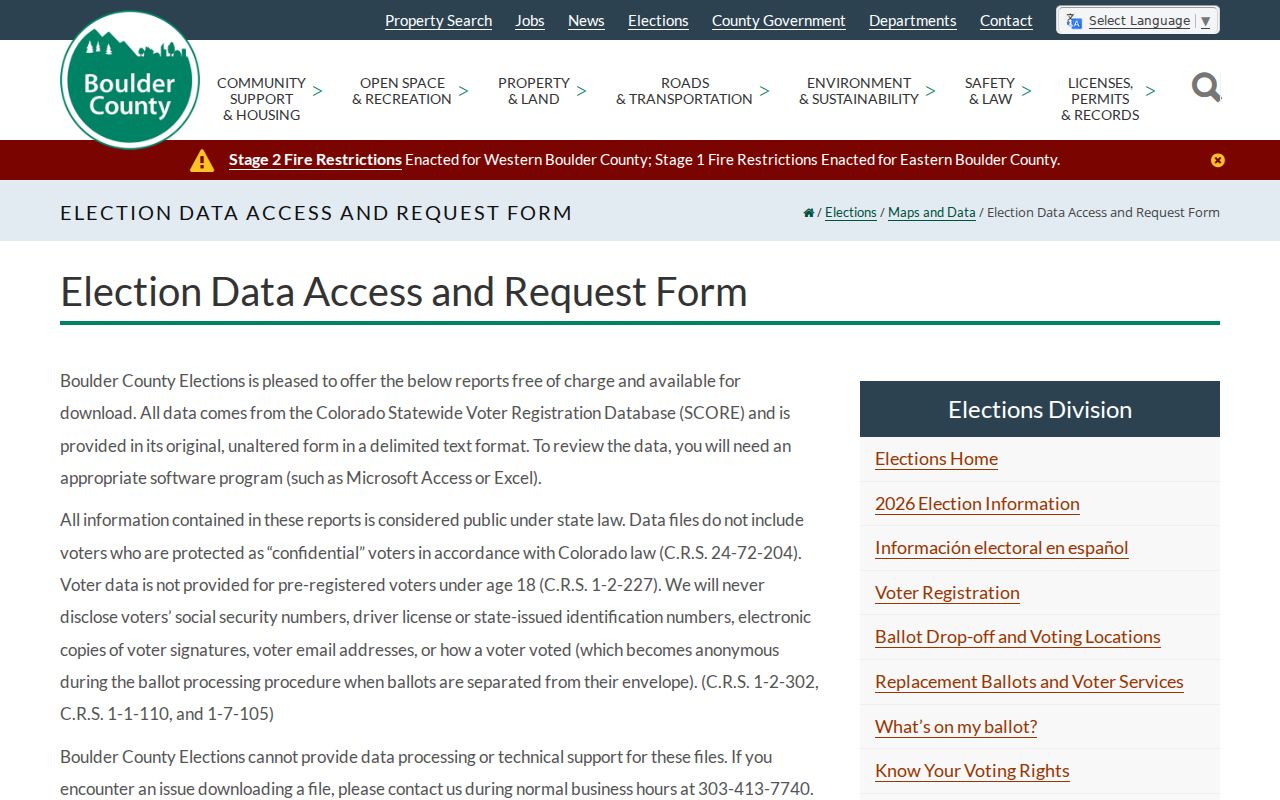
The screen is a reminder that a voter file is a regulated report with defined columns, not a live search box for every Lafayette resident.
Lafayette Court and Vital Records
The Colorado Judicial docket search lets a name searcher narrow by location, judicial district, county, courthouse, court type, division, date, year, case class, party, and attorney. Boulder is in the 20th Judicial District. Result rows show hearing date and time, duration, name, case number, hearing type, location, appearance type, and courtroom. Save the case number, then use the Judicial record and document request form when a public copy is appropriate. A docket row is not the full file, and sealed, juvenile, suppressed, or protected material may be absent.
Lafayette Municipal Court is a separate custodian for city-code, traffic, parking, animal, and other limited-jurisdiction matters. Its request form asks for defendant, case or citation number, DOB, requester details, and the document type wanted. Boulder Combined Court handles district and county trial matters, including probate and family cases. PACER is a separate route for federal cases.
Colorado vital records are different again. Under C.R.S. §25-2-117, birth, death, adoption, marriage, and divorce records are confidential, with eligibility, ID, and direct-and-tangible-interest rules. CDPHE routes current birth and death applications; the county Clerk and Recorder handles marriage and civil-union licensing; district-court clerks hold divorce files; the State Archives holds older series. No general public vital name index was located.
The Colorado Judicial docket search shows the filters that turn a broad name into a Boulder County case lead.
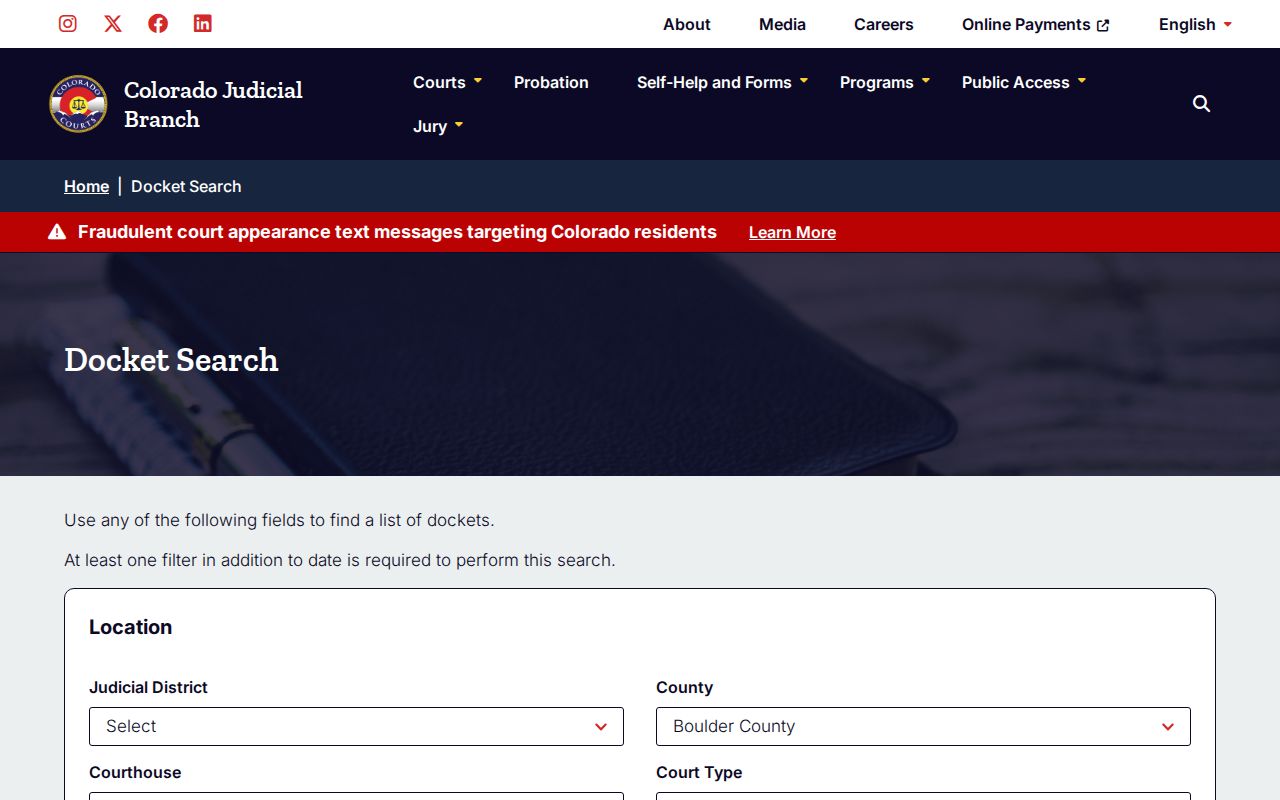
Use a court result to request a lawful record, not to infer facts that the public row does not display.
For a certificate request, the Colorado vital-records application route explains ID, eligibility, payment, mail, online, and appointment paths.
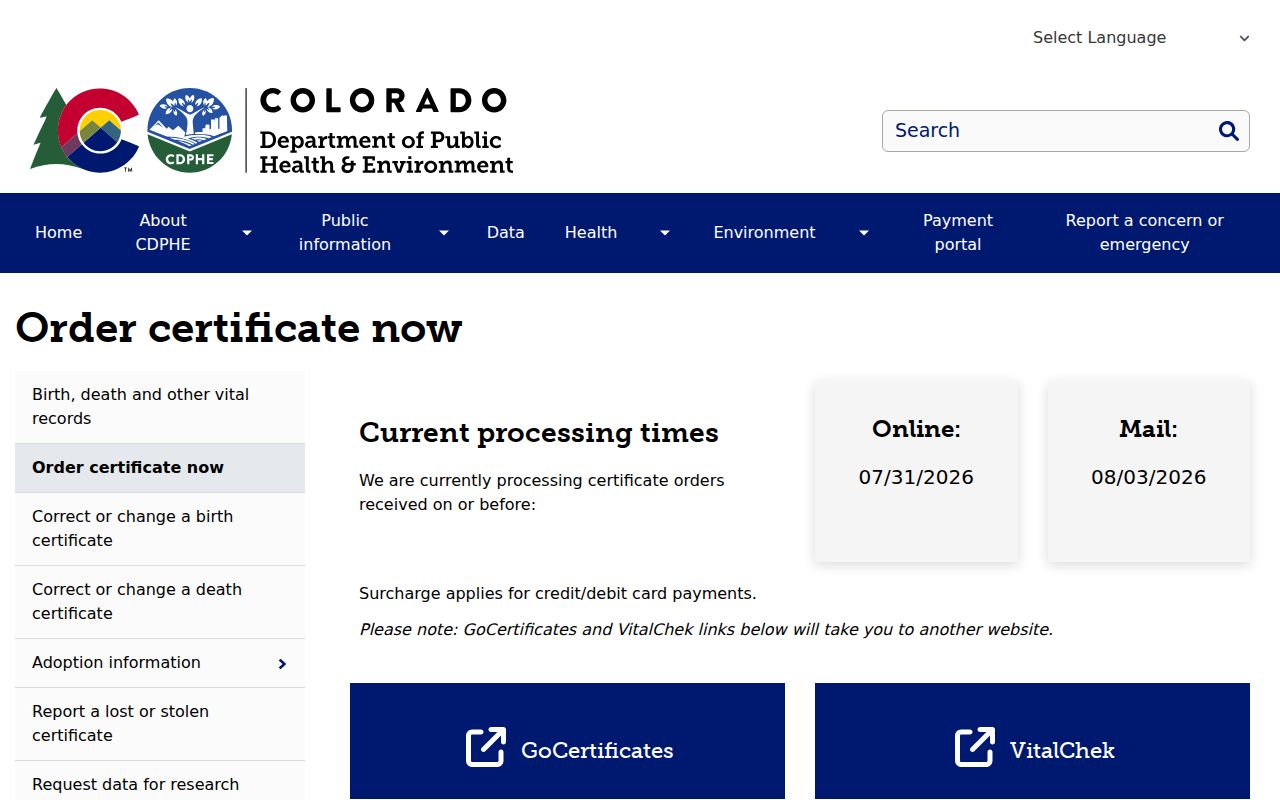
The application screen reinforces the central limit: a historical clue is not the same as an unrestricted certified copy.
Historical Lafayette Directory Trails
Lafayette city directories from 1892-1978 are documented at Carnegie Library for Local History and Lafayette Public Library. The complete publisher list and year-by-year continuity were not established, so each volume's title page and shelf record matter. A 1902 Carnegie telephone subscribers record includes Lafayette along with Boulder, Broomfield, Eldora, Erie, Longmont, Louisville, Lyons, Wallstreet, and Ward. It lists subscribers and phone numbers, not every person in a home.
The National Archives city-directory resource identifies Boulder regional volumes for 1926, 1928, 1930, and 1932 that include Lafayette. Directories can supply names, addresses, occupations, business labels, and sometimes household notes. Pair a directory year with census, deed, newspaper, or obituary evidence. The historical collection is treated in depth on the Lafayette city directories page.
For a missing scan, ask Lafayette Library or Carnegie staff about microfilm, bound newspapers, digitized items, clipping files, oral histories, yearbooks, and scanning. The City Archives holds maps, minutes, reports, pamphlets, scrapbooks, photographs, audio, video, and digital material. A collection request framed by an address, mine, church, subdivision, or date can work better than a surname alone.
The Colorado State Archives search exposes title, creator, date, category, archival level, and archive-number fields for historical collections.
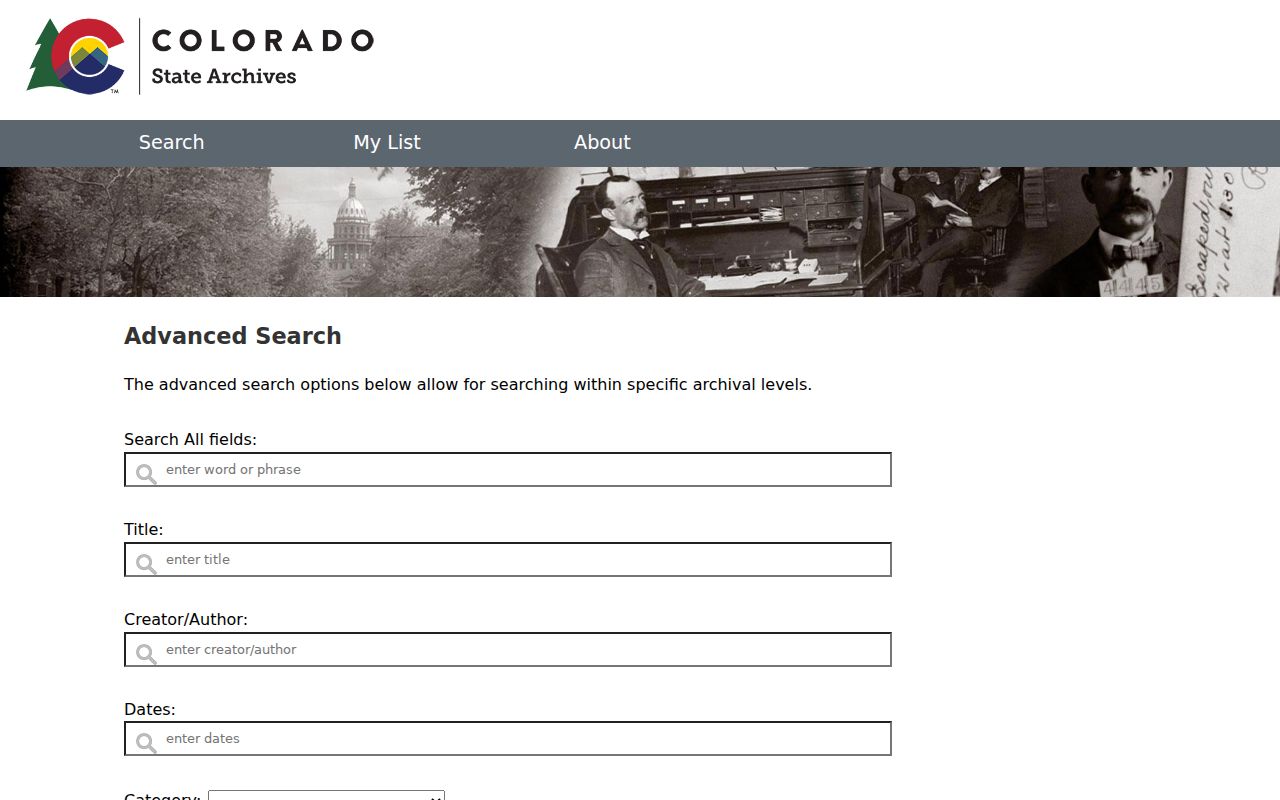
Those catalog fields are useful when an older Lafayette name is filed inside a record series rather than a person index.
Note: A directory year is a dated clue; pair it with an address, newspaper, deed, obituary, or archive record before extending the story.
Lafayette Newspapers and Resident Obituaries
The Lafayette Library identifies historical photographs, area newspapers on microfilm and bound volumes, online Colorado Historic Newspapers Collection access, genealogy books, and statewide borrowing. Its early newspaper material and online oral-history collection can fill the gap between a directory year and a later deed. Carnegie's county-level room supplies local-history scanning and staff research support. Use surname, business, mine, church, and address terms, then repeat with spelling and OCR variants.
Boulder Genealogical Society resources list Daily Camera obituary indexes for 1901-1910 and the 1950s-1970s, with full obituaries from 1975-2017 at Carnegie. An index is a pointer, not always the full text. An obituary may name relatives, a former town, a funeral home, or a residence, but it can omit non-owner occupants and other household members. Cemetery ownership and burial records are held by the Lafayette City Clerk, not by a universal public lookup.
For a family-history search, note the notice date, named relationships, address wording, and source title. Confirm key facts through an archive or eligible certificate rather than treating a clipped notice as a certified record.
Lafayette Coal-Era Resident Collections
Lafayette's record trail reflects its coal-town beginning. Coal was found at the Miller Farm in 1884, John Simpson opened a shaft in 1887, Mary Miller platted 150 acres in 1888, and the town incorporated in 1890 after an 1889 re-plat. The 1889-1946 coal era helps explain why a resident may appear in mine, union, church, school, or company papers even when a modern portal has no useful result.
The City guide points to UMWA Local 1388 minutes, Odd Fellows records from about 1900-1950, Congregational Church minutes, school material, mine maps, and the Rocky Mountain Fuel Company collection at Denver Public Library Western History. The latter is described as about 70 unindexed boxes, so an archivist is more useful than a casual name search. The Lafayette History Museum and Lewis Home also hold mining, farming, and community material.
This is a local story with a practical search lesson. Match a directory name to an occupation, mine, organization, or street, then confirm the identity with a date or relative. The absence of a seamless digital archive is a fact, not a reason to invent a missing record.
Lafayette Business and License Records
Colorado Secretary of State records can connect a person to an entity, trade name, trademark, document, or registered-agent filing. The direct business search accepts business name, trademark, trade name, ID number, or document number. Advanced Search adds filing dates and person-role fields for registered agents, reserved-name holders, trade-name registrants, and trademark registrants. A filing address is an organizational clue, not a home address.
DORA's MyVerification search accepts profession, first or middle name, license type, last name, license number, and status, with wildcard behavior after partial data. A license record can confirm a regulated credential and status. It does not establish where a person lives. Lafayette's MuniRevs portal handles local business tax filings, but no public browsable licensee roster was located. The City Clerk is the route for a named local license record.
The Colorado Secretary of State business search shows the name and filing modes available for an affiliation check.
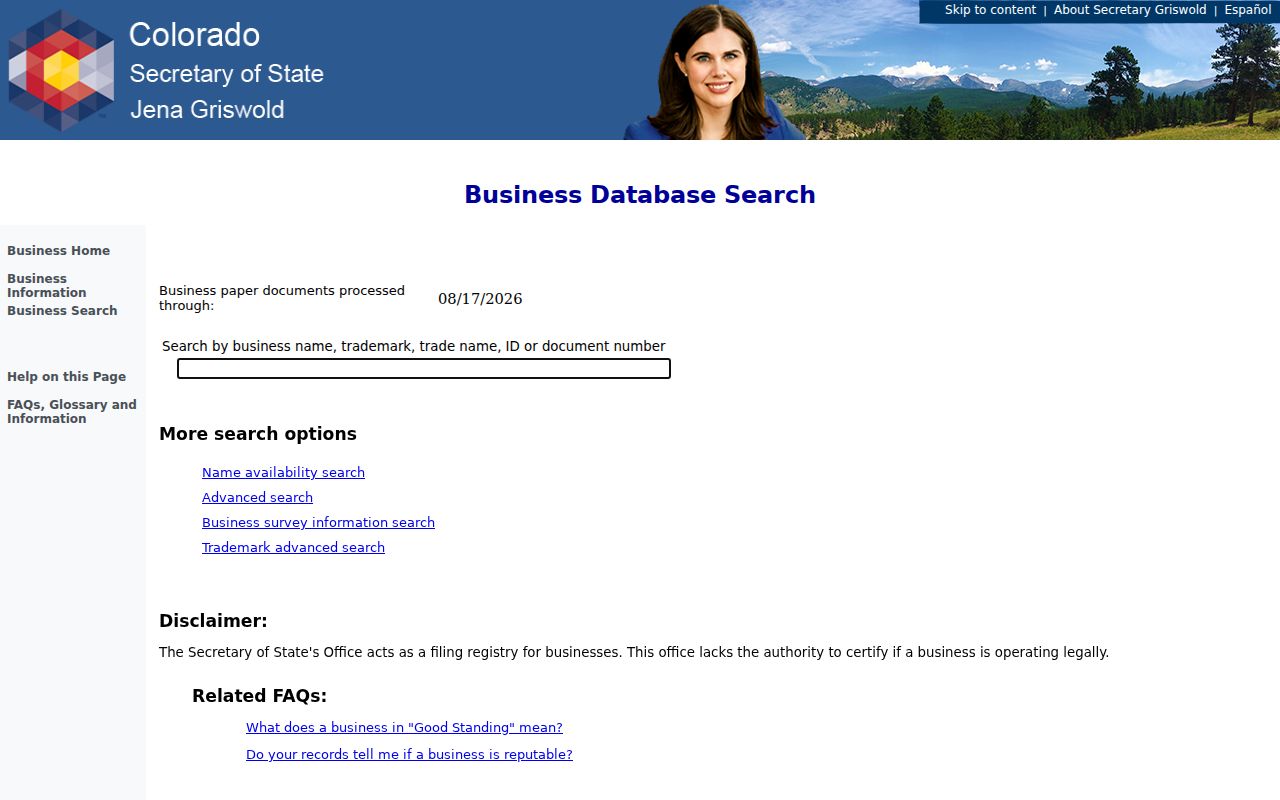
Use the entity ID or license number when possible. It is a stronger match than a name alone.
Jail, DOC, and Registry Records Differ
A current Boulder County jail listing is a daily public-information report, not an official criminal-history archive. Older booking, mugshot, incident, or body-camera material goes to Sheriff Records, where the research documents a $5 report search, $40 per hour for research and retrieval, and a possible 50 percent deposit for large requests. Colorado DOC has its own inmate locator for state custody. The federal Bureau of Prisons is separate.
The CBI sex-offender registry has limited public categories. Juvenile matters and other nonpublic categories follow separate rules. The CBI Internet Criminal History Check is a paid Colorado-only name check that excludes juvenile, sealed, and under-16 traffic material. A registry or custody result must never be presented as a general Lafayette resident record.
The Boulder County jail listing page identifies current and next-24-hour report views and warns that the listing is general information.
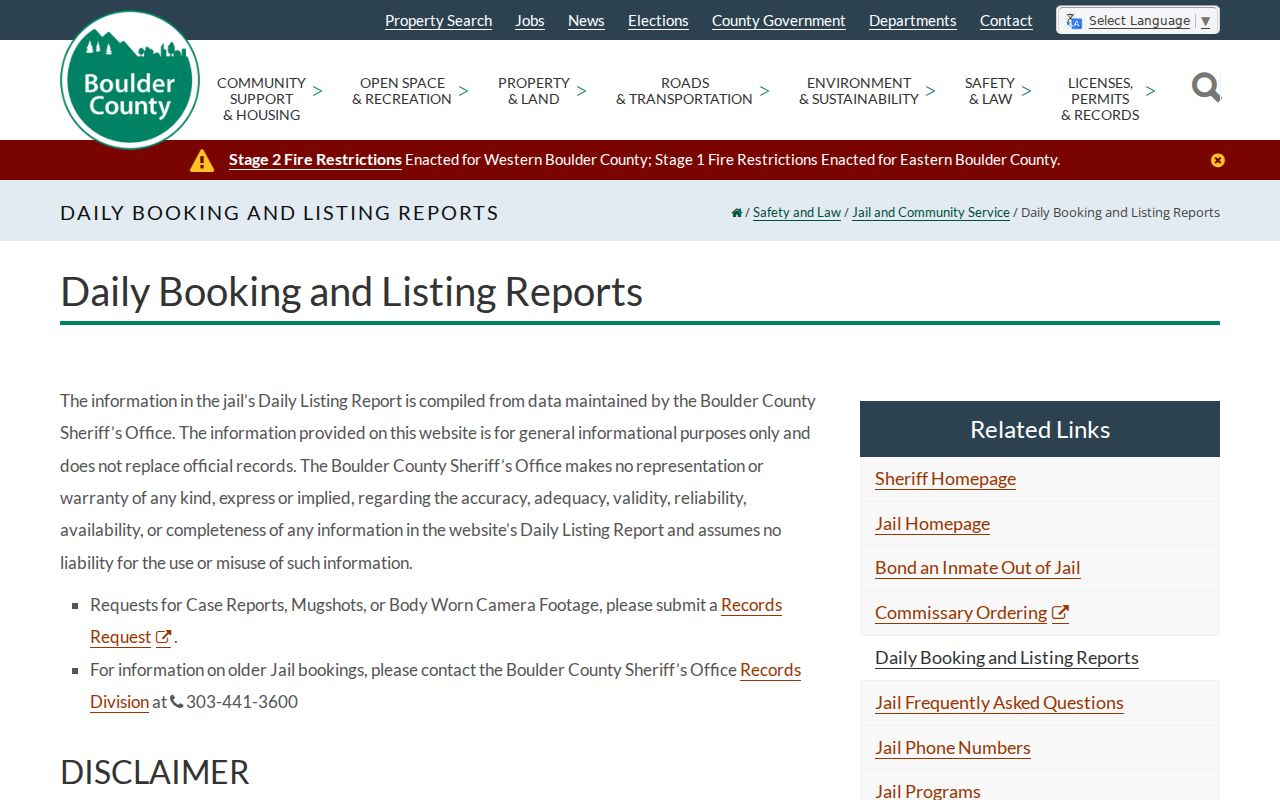
The report's warning is part of the record. For an older file, contact the named custodian instead of treating a daily listing as a permanent archive.
The Colorado public registry provides a separate lookup route with statutory category limits.
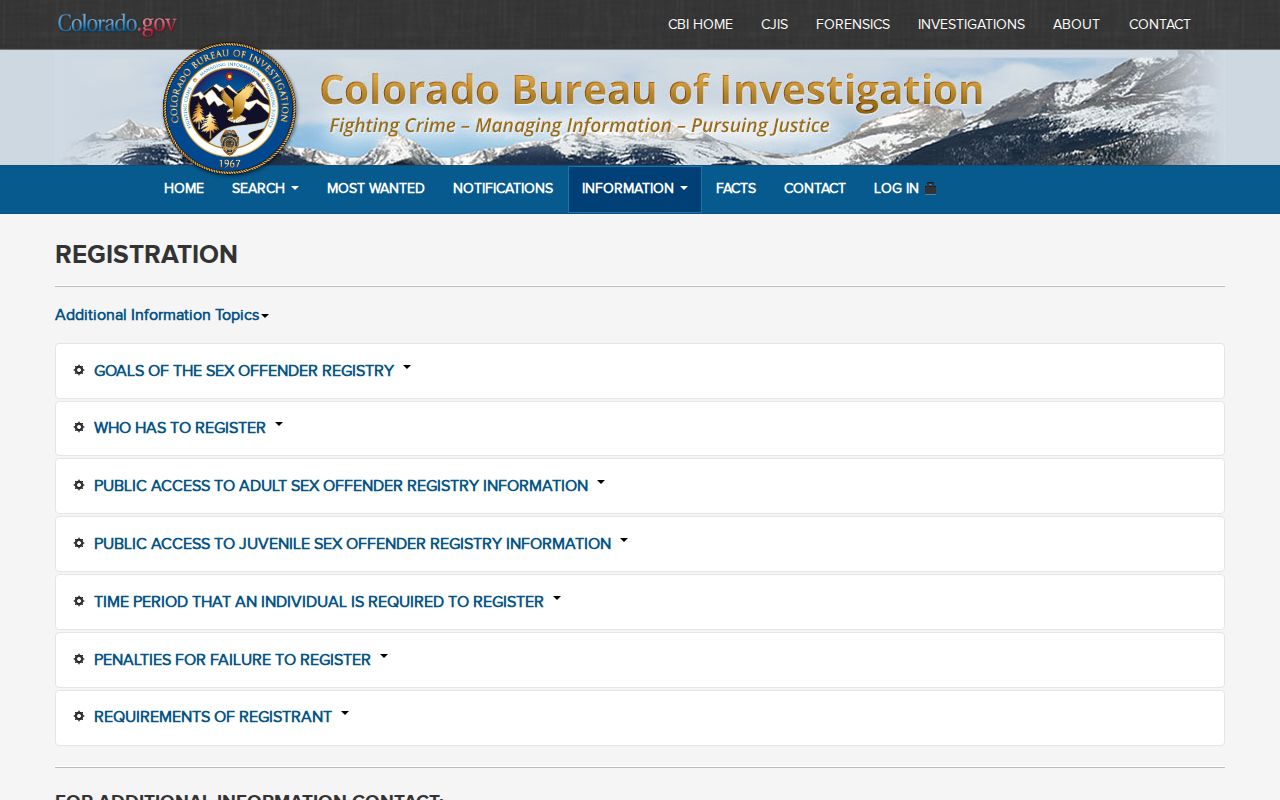
A public registry result is a narrow official record. It is not a complete identity profile or a reason to republish sensitive details.
Lafayette Records Need Requests
Online access is only one channel. The recording portal gives free watermarked image viewing and charges for non-watermarked copies. Its accessible pages do not state an online start year. Lafayette's house-history guide says deed and sale history usually reaches back to about 1980, so older chains may need the Recording Division, deed books, microfilm, library, or archive. The same principle applies to city permits, cemetery interments, directory scans, and court documents.
Start a CORA request with the custodian, a narrow date range, exact address, account, case, or record type. Colorado Open Records Act sections C.R.S. §§24-72-201 to 206, especially §24-72-203, govern inspection and copying subject to exceptions and custodian policy. The City Clerk, county Open Records Center, court clerk, Sheriff Records, library, and State Archives each have a different route. Phone and email can confirm the correct form before a visit or mail request.
- Roll
- A list maintained for a defined purpose, such as property assessment or voter registration. It is not a list of every resident.
- Index
- A finding aid with names, dates, or legal references. It may point to an image or file without showing the whole record.
- Parcel
- A mapped piece of land identified by county account, parcel number, and legal description.
- Criss-cross directory
- An address-first directory that may connect a street location to an occupant, if a local run exists.
Note: When a portal ends, preserve the failed search terms and send the narrow request to the custodian that holds the record.
Lafayette PropertyAlert Adds a Safety Check
Boulder County's free PropertyAlert can notify an enrollee about recorded deeds, liens, and mortgage-related documents tied to selected property information. The alert does not prove that a filing is valid. The Recorder records documents that meet statutory requirements and cannot certify every fact inside them. For a suspected fraudulent deed or lien, contact the Recording Division and Boulder County Sheriff rather than paying an unsolicited mailer for a copy or monitoring plan.
The county's current Clerk and Recorder work also matters. A 2026 remodel added a service window, more than 80 percent of transactions are reported online, and the office plans to upload and index 189,000 images. A July 2025 statewide flat recording fee changed the counter-versus-online comparison. Those developments make a direct official check more useful when a portal result looks incomplete.
Use the custodian first. A record can be public and still be stale, incomplete, or wrong. Confirm the account, document number, and legal description with the office that holds it.
Lafayette ZIP and City Lines Differ
USPS delivery geography is not a city-limit layer. ZIP 80026 is Lafayette's principal mailing ZIP, but nearby delivery geography can carry another ZIP. Postal Bulletin 22222 records one delivery shift from Lafayette 80026 to Louisville 80027 effective November 10, 2007. Postal Bulletin 22257 records seven deliveries shifted from Lafayette 80026 to Erie 80516 effective April 25, 2009. Verify an individual address before assigning a city label.
The Boulder parcel layer, the City's Lafayette limits and street layers, the assessor's situs field, the tax mailing field, and a USPS result can all describe different parts of one address. Keep four notes: situs, mailing, legal description, and ZIP. A historical directory can add a fifth, the publication-era city or street number.
The official Boulder County PropertyAlert page connects a local resident-record task to a current fraud-notification service.
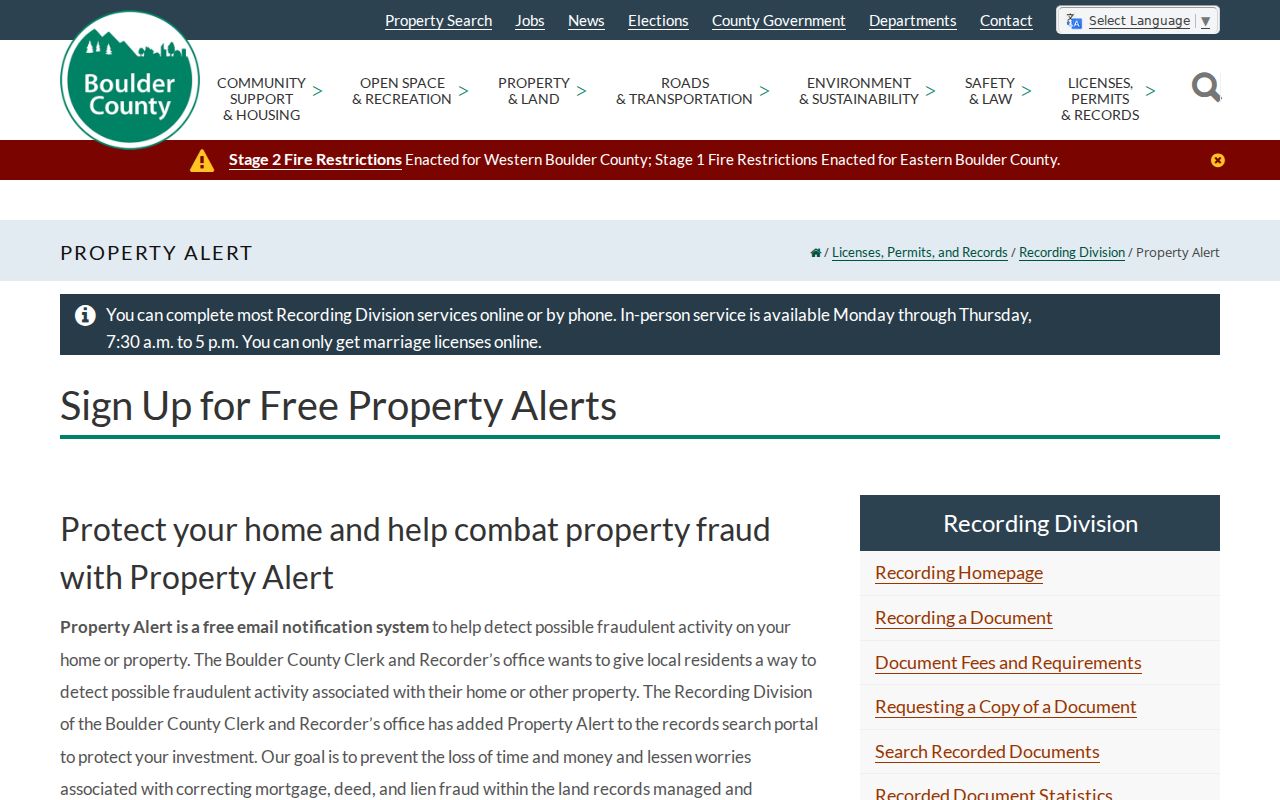
That local alert is useful because it turns a passive deed index into a way to notice a new filing.